
Modern Greek Alphabet, Accents, and Punctuation
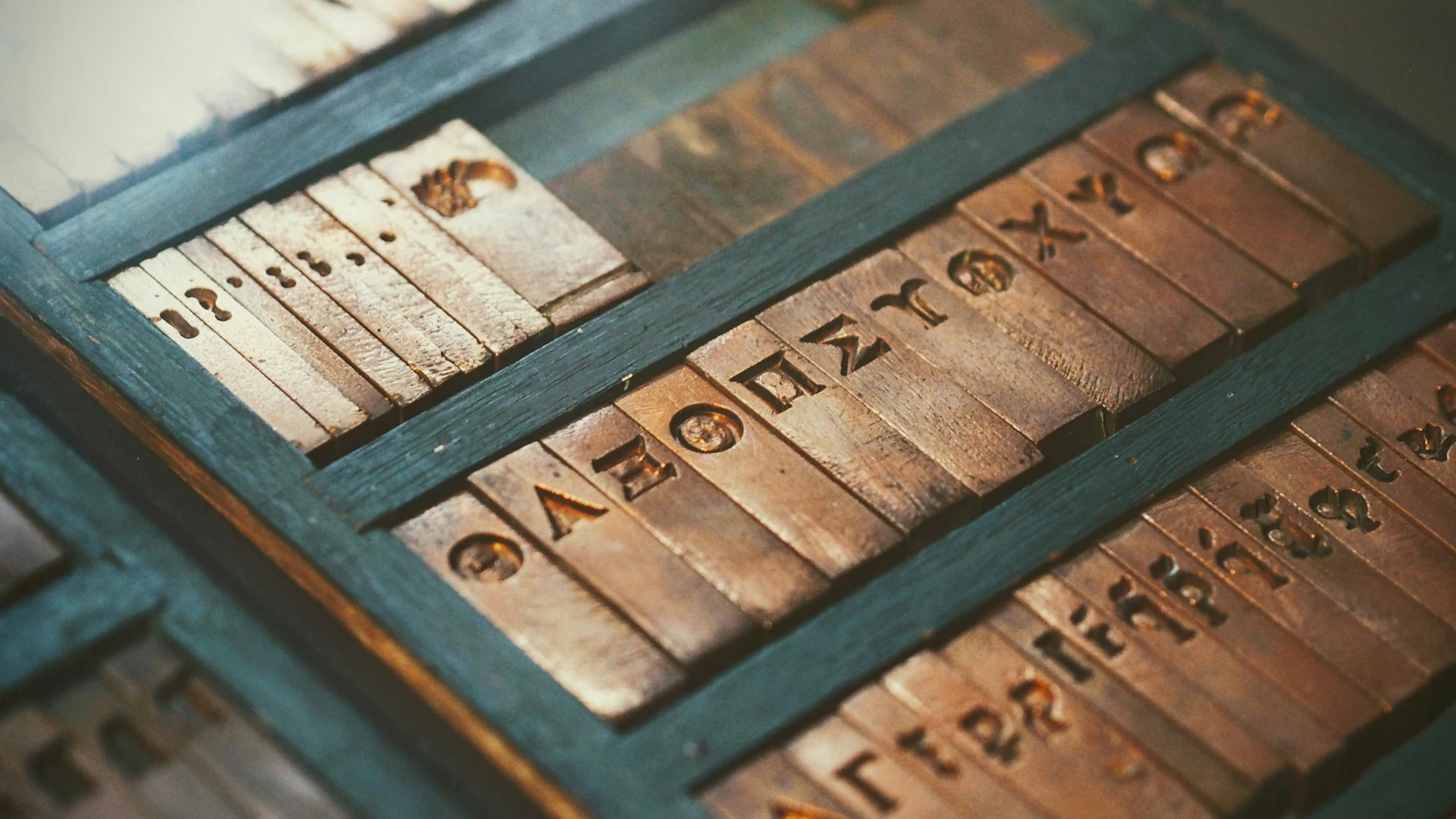
Mastering the Greek writing system is essential for anyone who wants to learn Greek, understand Greek grammar, or improve their reading and writing skills. This guide covers the Modern Greek alphabet, accent marks, punctuation, syllabification, and common abbreviations—everything you need to start writing in Greek with confidence.
The Modern Greek Alphabet: Letters and Sounds
The Modern Greek alphabet has 24 letters, each with a lowercase (πεζά) and uppercase (κεφαλαία) form. There’s also a special final version of sigma, called τελικό ς, which pops up only at the end of words. Altogether, these forms give you 49 symbols to represent the 25 unique sounds (phonemes) of Modern Greek.
Here’s a handy table with all the Greek letters, their names, and forms:
| Greek | Romanization | English Meaning |
|---|---|---|
| Α, α | a | alpha |
| Β, β | v | beta |
| Γ, γ | g | gamma |
| Δ, δ | d | delta |
| Ε, ε | e | epsilon |
| Ζ, ζ | z | zeta |
| Η, η | i | eta |
| Θ, θ | th | theta |
| Ι, ι | i | iota |
| Κ, κ | k | kappa |
| Λ, λ | l | lambda |
| Μ, μ | m | mu |
| Ν, ν | n | nu |
| Ξ, ξ | x | xi |
| Ο, ο | o | omicron |
| Π, π | p | pi |
| Ρ, ρ | r | rho |
| Σ, σ, ς | s | sigma |
| Τ, τ | t | taf |
| Υ, υ | i/y | ipsilon |
| Φ, φ | f | phi |
| Χ, χ | ch | chi |
| Ψ, ψ | ps | psi |
| Ω, ω | o | omega |
Note
The Greek writing system is historical, preserving features from ancient Greek. This means there is not always a direct correspondence between letters and sounds. Some letters or combinations represent more than one sound, and some sounds can be written in different ways. Understanding these nuances is key to mastering Greek spelling and pronunciation.
Key Cases in Greek Spelling
For example, ξ (k+s) and ψ (p+s).
Some sounds are written with two letters together. See the table below for common Greek digraphs and their pronunciation:
| Greek | Romanization | English Meaning |
|---|---|---|
| αι (pronounced as ε), π.χ. παιδί | ai (as e), e.g. paidi | "ai" (as in "pet"), e.g. "child" |
| ει (pronounced as ι), π.χ. πείρα | ei (as i), e.g. peira | "ei" (as in "machine"), e.g. "experience" |
| οι (pronounced as ι), π.χ. τοίχος | oi (as i), e.g. toichos | "oi" (as in "machine"), e.g. "wall" |
| ου, π.χ. μούσα | ou, e.g. mousa | "ou" (as in "boot"), e.g. "muse" |
| υι, π.χ. υιοθεσία | yi, e.g. yiothesia | "yi" (as in "machine"), e.g. "adoption" |
| μπ, π.χ. εμπόριο | mp, e.g. emporio | "b" (as in "book"), e.g. "trade" |
| ντ, π.χ. αντίπαλοι | nt, e.g. antipaloi | "d" (as in "dog"), e.g. "opponents" |
| γγ, π.χ. άγγελος | ng, e.g. angelos | "ng" (as in "angle"), e.g. "angel" |
| γκ, π.χ. αγκάθι | gk, e.g. agkathi | "g" (as in "go"), e.g. "thorn" |
Some words have two of the same consonant together, but they are pronounced as one sound. Examples: ββ, κκ, λλ, μμ, νν, ππ, ρρ, σσ, ττ, as in Σάββατο (Saturday), αλλά (but).
Note
The same letter for different sounds: The letter υ usually sounds like ι (i), but in combinations like αυ and ευ, it can sound like v or f depending on the next letter. For example, αυλή (avli, "yard") and αυτός (aftos, "this one").
Subscribe for more free lessons
Greek Accent Marks and Diacritics: The Monotonic System
Main Greek Accent and Diacritic Marks
- Accent (τόνος) (΄)
- Diaeresis (διαλυτικά) (¨)
- Apostrophe (απόστροφος) (’)
Accent (Τόνος)
- Every word with two or more syllables written in lowercase gets an accent on the vowel of the stressed syllable, e.g. τονίζω (I stress).
- Words in all uppercase usually do not have an accent, e.g. ΛΕΞΗ (WORD).
- If a word starts with a capital letter and the accent is on the first syllable, the accent is placed to the left of the first vowel, e.g. Όμηρος (Homer).
- In vowel combinations (digraphs), the accent goes on the second letter, e.g. παίζω (I play), ναύτης (sailor). In diphthongs, the accent goes on the stressed vowel, e.g. γάιδαρος (donkey).
- The accent is also used next to numbers to show minutes, e.g. 17.30΄, and next to some letters to show numbers, e.g. Ε΄ (5), κα΄ (21), λη΄ (38).
Accent Rules (Monotonic System)
- Every word with two or more syllables gets an accent, even if it becomes one syllable after contraction, e.g. κόψ' τον, but not if the stressed vowel is missing, e.g. θα ήθελε --> θα 'θελε, μου είπε --> μου 'πε.
- One-syllable words do not get an accent, except:
- The conjunction ή (or), e.g. ή αυτός ή εσύ (either him or you).
- The question words πού (where) and πώς (how), e.g. Πού θα πας; (Where will you go?), Με ρώτησε πώς τα περνάω (He asked me how I am doing).
- Weak forms of Greek personal pronouns (μου, σου, του, της, τον, την, το, μας, σας, τους, τις, τα) when they could be mistaken for enclitics, e.g. Η μητέρα μού είπε (My mother told me [to me]), vs. Η μητέρα μου είπε (My mother told [me]).
- One-syllable words pronounced with emphasis together with certain verb forms, e.g. θά 'ρθω (I will come [with emphasis]), θά 'ρθεις, but θα 'ρθεις (less emphasis).
Note
If a second accent is heard, it is written, e.g. πήγαινέ τους (take them [imperative]).
Diaeresis (Διαλυτικά)
- Used to show that two vowels are pronounced separately, not as a single sound. Placed over ι or υ, e.g. παϊδάκι (little chop), Μαΐου (May). If the previous vowel is accented, diaeresis is not used, e.g. νεράιδα (fairy).
Apostrophe (Απόστροφος)
- Shows that a vowel has been left out in writing because of pronunciation, e.g. πάρ' αυτά (take these), το 'δεσα (I tied it).
Comma (Υποδιαστολή)
- Used in the word ό,τι (whatever) to distinguish it from ότι (that), e.g. Θα κάνει ό,τι θέλει (He will do whatever he wants).
- Also used in decimal numbers, e.g. 12,543.
Note
In Greek, a comma is used for decimal numbers, not a period. So 12,543 in Greek means “twelve point five four three,” not twelve thousand five hundred forty-three. This can look confusing at first if you're used to English formatting, but you’ll get used to it quickly once you spot the pattern.
Greek vs. English Number Formatting: Decimal Notation
| Greek Format | English Equivalent |
|---|---|
| 12,543 | 12.543 (twelve point five four three) |
| 1.200 | 1,200 (one thousand two hundred) |
| 3.500,75 | 3,500.75 |
| 0,25 | 0.25 |
| 5.000 | 5,000 |
Subscribe for more free lessons
Greek Punctuation Marks: Usage and Rules
Punctuation in Greek writing helps convey meaning and structure, just as in English. Here are the main Greek punctuation marks and their uses:
| Greek | Pronunciation | English Meaning |
|---|---|---|
| . | teleia | period |
| · | ano teleia | semicolon |
| , | komma | comma |
| ; | erotimatiko | question mark |
| ! | thavmastiko | exclamation mark |
| : | dipli teleia | colon |
| ( ) | parentheseis | parentheses |
| ... | aposiopitika | ellipsis |
| – | pavla | dash |
| – – | dipli pavla | double dash |
| « » | eisagogika | quotation marks |
| - | enotiko | hyphen |
How to Use Greek Punctuation
- At the end of a complete sentence, e.g. Χτύπησε το τηλέφωνο. Κανένας δεν το άκουσε. (The phone rang. No one heard it.)
- After abbreviations, e.g. Η κ. Κλαδάκη παρουσίασε το έργο της. (Ms. Kladaki presented her work.)
- In large numbers to separate thousands and hundreds from millions, e.g. 7.342.156.
- To separate hours and minutes, e.g. 09.15΄.
After a period, start with a capital letter.
- To separate words, phrases, or clauses, e.g. Η Ειρήνη πήρε μαζί της τα σεντόνια, τα μαξιλάρια, τις κουρτίνες και τις κουβέρτες. (Irini took with her the sheets, pillows, curtains, and blankets.)
- In direct address, e.g. Ανέβασες, Λευτέρη, το κουτί στον πρώτο όροφο; (Lefteris, did you take the box to the first floor?)
- To separate subordinate clauses from main clauses, e.g. Η Ανδρομάχη χάρηκε, γιατί πήρε καλό βαθμό στο διαγώνισμα. (Andromachi was happy because she got a good grade on the test.)
- In parenthetical phrases, e.g. Ο νομάρχης μας, ο κ. Γεωργίου, επισκέφθηκε το σχολείο μας. (Our prefect, Mr. Georgiou, visited our school.)
- After exclamations or sentences expressing strong feelings, e.g. Αχ! Έγινε η αυλή πολύ ωραία. Τι πλημμύρα κι αυτή! (Ah! The yard became very beautiful. What a flood that was!)
- Sometimes used in parentheses to show surprise or admiration about what someone else said, e.g. Ο υπουργός Γεωργίας υποσχέθηκε στους αγρότες παραγραφή όλων των δανείων (!). (The Minister of Agriculture promised the farmers the cancellation of all loans (!).)
After a question mark or exclamation mark, start with a capital letter, unless the sentence continues.
- Before a quotation, e.g. Μπήκε με ταχύτητα στην αίθουσα και φώναξε: «Θα πάμε εκδρομή». (He entered the room quickly and shouted: "We are going on a trip.")
- Before a list or explanation, e.g. Οι νομοί της δυτικής Μακεδονίας είναι τέσσερις, οι εξής: των Γρεβενών, της Καστοριάς, της Κοζάνης και της Φλώρινας. (The prefectures of Western Macedonia are four: Grevena, Kastoria, Kozani, and Florina.)
- Before a proverb or saying, e.g. Να έχεις πάντα στο μυαλό σου την παροιμία: κάνε το καλό και ρίξ' το στο γιαλό. (Always keep in mind the saying: do good and throw it into the sea.)
- To show that something is left unsaid or obvious, e.g. άνθρωπος αγράμματος … (an uneducated person …)
- In brackets to show omitted text from a quotation.
| Greek | Romanization | English Meaning |
|---|---|---|
| – Μη με τρομάζεις με τα λόγια σου. | – Mi me tromázeis me ta lógia sou. | – Don’t scare me with your words. |
| – Δε θέλω να τρομάξεις. Θέλω να σκεφτείς. | – De thélo na tromáxeis. Thélo na skeftís. | – I don’t want you to be scared. I want you to think. |
- At the beginning and end of a direct quotation, e.g. Ο πατέρας του τού είπε κοφτά: «Δύναμή σου είναι το μυαλό σου. Κοίταξε να το εκμεταλλευτείς». (His father told him sharply: "Your strength is your mind. Make sure to use it.")
- For special terms or names, e.g. Το αεροδρόμιο «Ελευθέριος Βενιζέλος» είναι από τα μεγαλύτερα της Ευρώπης. (The "Eleftherios Venizelos" airport is one of the largest in Europe.)
- For words or phrases used in a special or ironic way, e.g. οι επιβάτες του οχηματαγωγού έμεναν «ήσυχοι» στις θέσεις τους (the passengers remained "calm" in their seats [meaning they were actually anxious]).
- At the end of a line when a word is split, e.g. χα-ρά (joy).
- After certain prefixes with names, e.g. Αγια-Σοφιά, ο παπα-Κώστας (Saint Sophia, Father Kostas).
- Between two words in double names or compound words, e.g. Άννα-Μαρία, νόμος-πλαίσιο (Anna-Maria, framework law).
Subscribe for more free lessons
Syllabification in Greek: Dividing Words into Syllables
Syllabification is the process of dividing Greek words into syllables, which is important for correct spelling, pronunciation, and when splitting words at the end of a line. Here are the main rules for Greek syllabification:
- If a consonant is between two vowels, it goes with the second vowel, e.g. επό-με-νος (next), α-νά-με-σα (between).
- If two consonants are between vowels, they go with the second vowel if a Greek word can start with those two consonants. If not, the first consonant goes with the previous syllable, e.g. έ-κτι-ζε (he/she was building), βι-βλί-ο (book), but σύμ-φω-να (consonants), αρ-χί-ζει (he/she begins).
- If three or more consonants are between vowels, the first consonant goes with the previous syllable, the rest with the next, unless the first two can start a Greek word, e.g. κά-στρο (castle), ε-χθρι-κός (hostile), but αν-θρω-πιά (humanity).
- Digraphs, diphthongs, and combinations like αυ and ευ are treated as one sound and are not split, e.g. έ-μπο-ρος (merchant), πεί-ρα (experience), κο-ρόι-δο (fool), παι-διά (children).
- Double consonants are split, e.g. συλ-λα-βή (syllable), εν-νιά (nine).
- Compound words follow all the above rules, e.g. κα-τα-γρά-φω (I record), πα-ρα-μι-λά-ει (he/she talks nonsense).
Note
Greek Abbreviations: π.χ. vs. π.Χ. π.χ. stands for «παραδείγματος χάρη» and is the Greek equivalent of “e.g.” (for example). π.Χ. stands for «προ Χριστού» and is the Greek equivalent of “B.C.” (Before Christ).
Be careful with the capitalization:
- π.χ. (lowercase) = “for example”
- π.Χ. (uppercase Χ) = BC (Before Christ)
Common Greek Abbreviations: How to Write and Use Them
Abbreviations are frequently used in Greek writing, especially in formal documents, newspapers, and everyday communication. Here are some of the most common Greek abbreviations:
| Greek | Romanization | English Meaning |
|---|---|---|
| αγ. = άγιος | ag. = agios | St. (saint) |
| αι. = αιώνας | ai. = aionas | century |
| α.α. = αντ' αυτού | a.a. = ant' aftou | on behalf of / insted of |
| αρ. = αριθμός | ar. = arithmos | number |
| βλ. = βλέπε | vl. = vlepe | see (cf.) |
| γραμ. = γραμμάριο | gram. = grammario | gram |
| δίδα = δεσποινίδα | dida = despoinida | Miss |
| δηλ. = δηλαδή | dil. = diladi | that is |
| δρ. = διδάκτωρ | dr. = didaktor | Dr. (doctor) |
| εκ. = εκατοστό | ek. = ekatosto | centimeter |
| κ.ο.κ = και ούτω καθεξής | k.o.k = kai outo katheksis | etc. |
| κ. = κύριος, κυρία | k. = kyrios, kyria | Mr., Mrs. |
| κκ. = κύριοι, κυρίες | kk. = kyrioi, kyries | Messrs., Ladies |
| κ.ά. = και άλλα | k.a. = kai alla | and others |
| κτλ. = και τα λοιπά | ktl. = kai ta loipa | etc. |
| λ.χ. = λόγου χάρη | l.ch. = logou chari | for example |
| μ. = μέτρα | m. = metra | meters |
| μ.μ. = μετά μεσημβρίαν | m.m. = meta mesimvrian | p.m. |
| μ.Χ. = μετά Χριστόν | m.Ch. = meta Christon | A.D. |
| ο.π. = όπου παραπάνω | o.p. = opou parapano | ibid. |
| πρβλ. = παράβαλε | prvl. = paravale | compare |
| π.μ. = προ μεσημβρίας | p.m. = pro mesimvrias | a.m. |
| π.χ. = παραδείγματος χάρη | p.ch. = paradeigmatos chari | e.g. |
| π.Χ. = προ Χριστού | p.Ch. = pro Christou | B.C. |
| στ. = στίχος | st. = stichos | verse |
| τ.μ. = τετραγωνικό μέτρο | t.m. = tetragoniko metro | square meter |
| ΥΓ. = υστερόγραφο | YG. = ysterografo | P.S. |
| φφ. = φύλλα | ff. = fylla | leaves (pages) |
| χλμ. = χιλιόμετρο | chlm. = chiliometro | kilometer |
| ώ. = ώρα | o. = ora | hour |
The Importance of Accents in Greek: Changing Meaning
In Greek grammar, the accent mark is not just for pronunciation—it can change the meaning of a word entirely. Observe the following pairs of Greek words to see how the accent distinguishes meaning:
- νόμος-νομός (law - prefecture)
- δίπλα-διπλά (next to - double)
- κρέμα-κρεμά (cream - he/she hangs)
- μίσος-μισός (hatred - half)
- πότε-ποτέ (when - never)
- μόνος-μονός (alone - single)
This is why the accent in Modern Greek has a distinguishing function: it can change the meaning of a word, making it essential for anyone learning Greek to pay close attention to accent placement.
By understanding the Greek alphabet, accent marks, punctuation, and syllabification, you lay a strong foundation for reading, writing, and mastering Greek grammar. Whether you are a beginner or looking to refine your skills, these basics are key to progressing in your journey to learn Greek.